Setting up a vendor table at a card show: layout, pricing, and a smooth first day
By Treasure Trove Editorial · · 4 min read
Running a table is the fastest way to turn a collection into a small business, or at least into a fun weekend that pays for itself. It is also more work than it looks. Here is what experienced vendors do before, during, and after a show.
Book the right show
Start with a show that matches what you sell. A TCG-heavy crowd will walk past a case of vintage baseball, and the reverse is also true. Visit as a buyer first if you can, and notice which tables are busy. Ask the organizer about table fees, table size, whether a chair and electricity are included, setup times, and how many tables sell similar inventory.
Table fees range from about $40 at small local shows to several hundred dollars at big regional ones. A useful rule: you want sales to cover the fee several times over, after the cost of the cards you sold. If you need a busy show to break even, start smaller. You can browse upcoming shows by state and see table counts on each listing.
What to bring
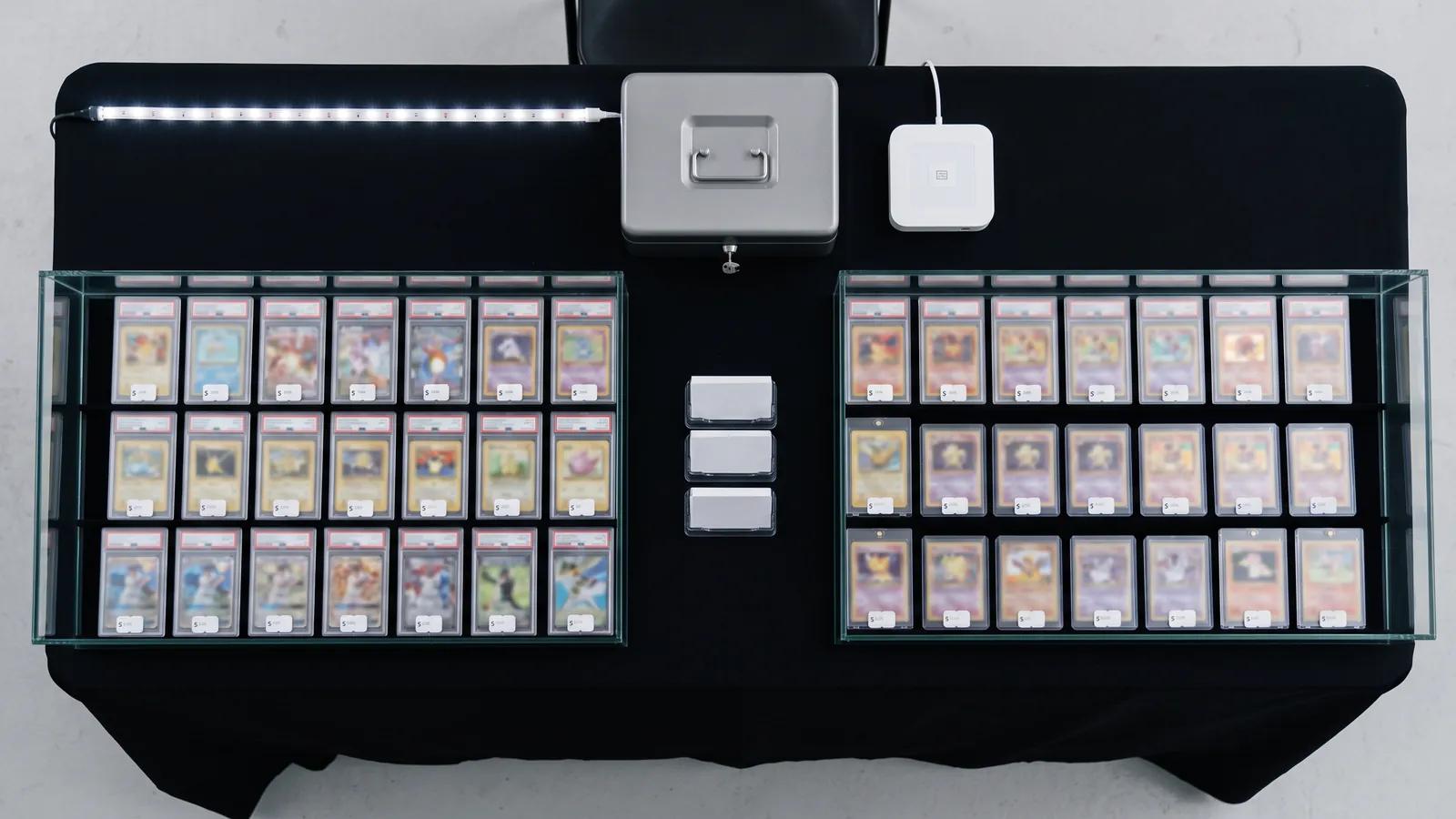
- Display cases with locks, and a light if the venue is dim. Good lighting sells cards.
- A tablecloth that covers the table to the floor. It looks finished and hides your boxes underneath.
- Price labels, a fine marker, and a few signs for bins ("$1 each", "$5 each or 6 for $25").
- Cash for change: a mix of ones, fives, tens, and twenties. $200 to $300 is common for a small table.
- A card reader and a payment app QR code printed on a small sign.
- Supplies to sell or give with purchases: penny sleeves, top loaders, team bags.
- A dolly or cart, tape, scissors, zip ties, a power strip, and a phone charger.
- Water, food, and a comfortable chair. Shows are long days on your feet.
Lay out the table for browsing
People decide in a few seconds whether to stop. Put your most eye-catching cards at the front of the case, facing the aisle, at eye level when they lean in. Group by theme so people can find what they collect: by sport and team, by game and set, by character, or by price tier. Keep the front edge of the table clear so customers have room to look through binders.
Bins with a clear flat price draw people in, especially younger collectors. They are also a good way to move cards you do not want to price one by one. Put them at the ends of the table where people can dig without blocking your case.
Pricing and signage
Price everything. Unpriced cards slow down sales because many buyers will not ask. Use recent sold prices, not asking prices, and decide in advance how much room you have to negotiate. Round numbers are easier to work with. Some vendors mark a firm price and say so on a small sign; others price a little high to leave room. Either works if you are consistent.
A simple sign with what you buy ("Buying vintage baseball, Pokémon slabs") brings sellers to you, which is where a lot of a vendor's best inventory comes from.
Payments and records
- Count your starting cash and write it down.
- Log every sale, even quickly: card, price, method. It helps with taxes and tells you what sells.
- Confirm every app payment on your phone before the card leaves your hands.
- Check your state's rules on sales tax for collectibles at temporary events. Some organizers handle it; many do not.
Security
Theft at shows is not common, but it happens, usually in crowded moments or during setup and teardown. Lock your cases. Keep high value cards in the case, not on the table. Show one card at a time and take it back before showing the next. If you need a break, ask a neighbor to watch your table or cover the case. Keep your cash on your body.
Setup day and the first hour
- Arrive at the start of setup. Parking and loading are easier, and you have time to fix problems.
- Set up the cloth and cases, then lighting, then signage, then fill the cases.
- Walk to the aisle and look at your table as a buyer would. Fix whatever looks cluttered.
- Use the dealer setup window to walk the floor. Some of the best buying happens between vendors before doors open.
- Be at your table when doors open. The first hour is often the busiest.
A quick break-even check
Before you book, do the math once. Say the table is $120, and you will spend $30 on gas and parking. If your cards sell on average for 25 percent more than you paid for them, you need about $600 in sales just to cover $150 in costs. That is very doable at a busy show and hard at a slow one. Knowing the number keeps you from pricing in a panic late in the day.
Also count your time. A show is often a 10 hour day once you add setup and teardown. If the numbers only work when everything sells, bring more of the inventory that moves fast at that kind of show and less of the slow stuff.
Working with buyers
Greet people when they stop, then give them space to look. Ask what they collect. Many sales come from a card that was in a box under the table because you knew someone was looking for it. Be clear about your prices and your flexibility. If you take offers, say so. If a price is firm, say that kindly. Either way, people remember a vendor who was easy to deal with.
After the show
Write down your total sales, the fee, and what sold fastest. After three or four shows, patterns appear: which inventory moves at which shows, and which shows are worth a table. Follow up with buyers who asked for cards you did not have.
Organizers: if you run a show, list it for free so collectors can find it, and keep the dates and table count current.
Quick answers
How much does a vendor table at a card show cost?
From about $40 at small local shows to several hundred dollars at large regional shows. Ask the organizer what is included, such as chairs, electricity, and an extra badge.
How much cash should a vendor bring for change?
Around $200 to $300 for a small table, in ones, fives, tens, and twenties. Bring more for bigger shows or higher priced inventory.
How do I get more people to stop at my table?
Good lighting, a full and organized case facing the aisle, clear prices on everything, and flat-price bins at the ends of the table.
Find a show to try it at
See what is on near you this weekend, sorted by distance.