Card show etiquette: the unwritten rules dealers wish everyone knew
By Treasure Trove Editorial · · 4 min read
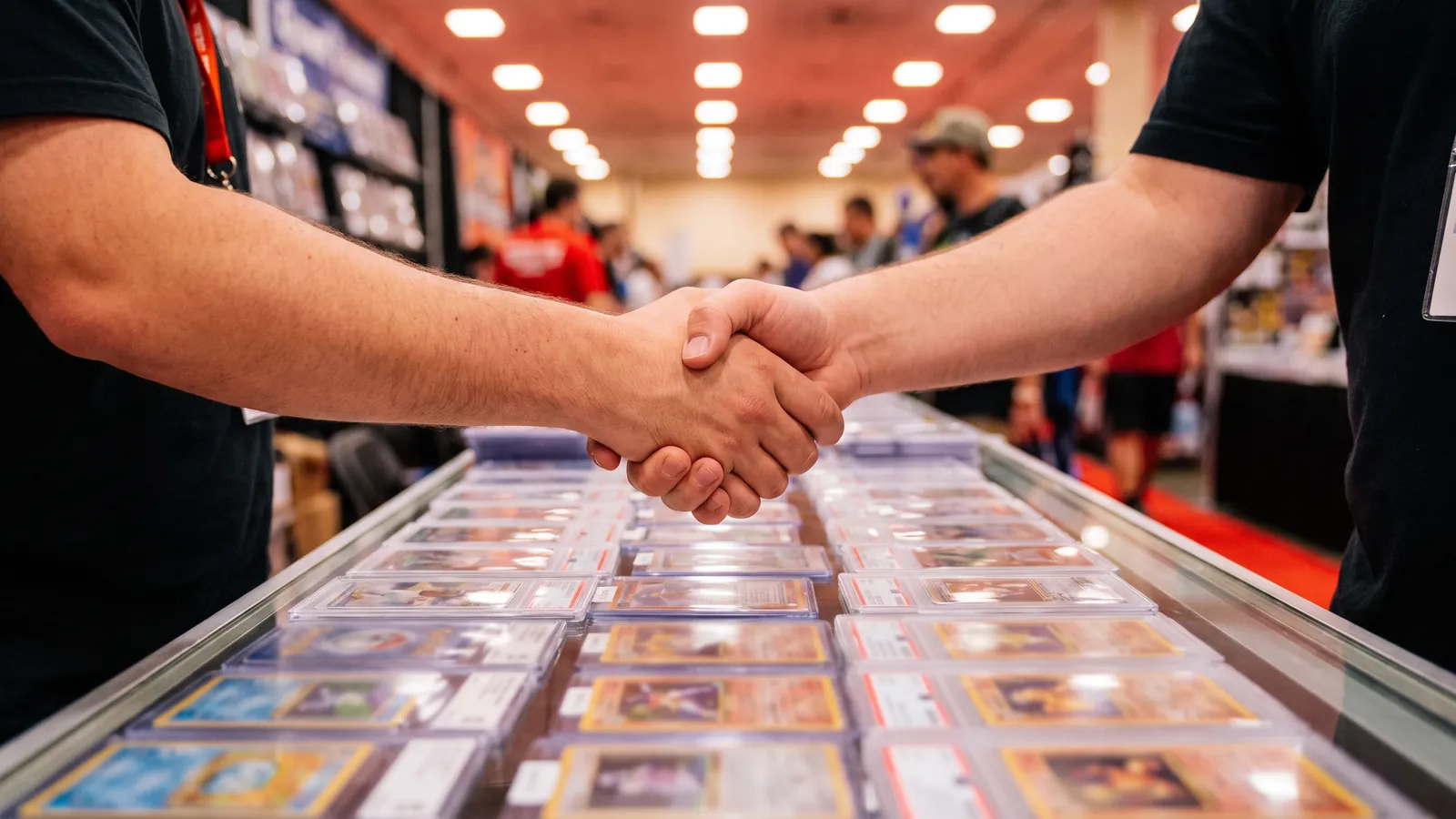
Card shows run on trust. Dealers hand strangers cards worth hundreds of dollars dozens of times a day. A few simple habits make you the kind of customer they are glad to see, and that tends to come back to you in better prices and first looks at new stock.
Ask before you touch
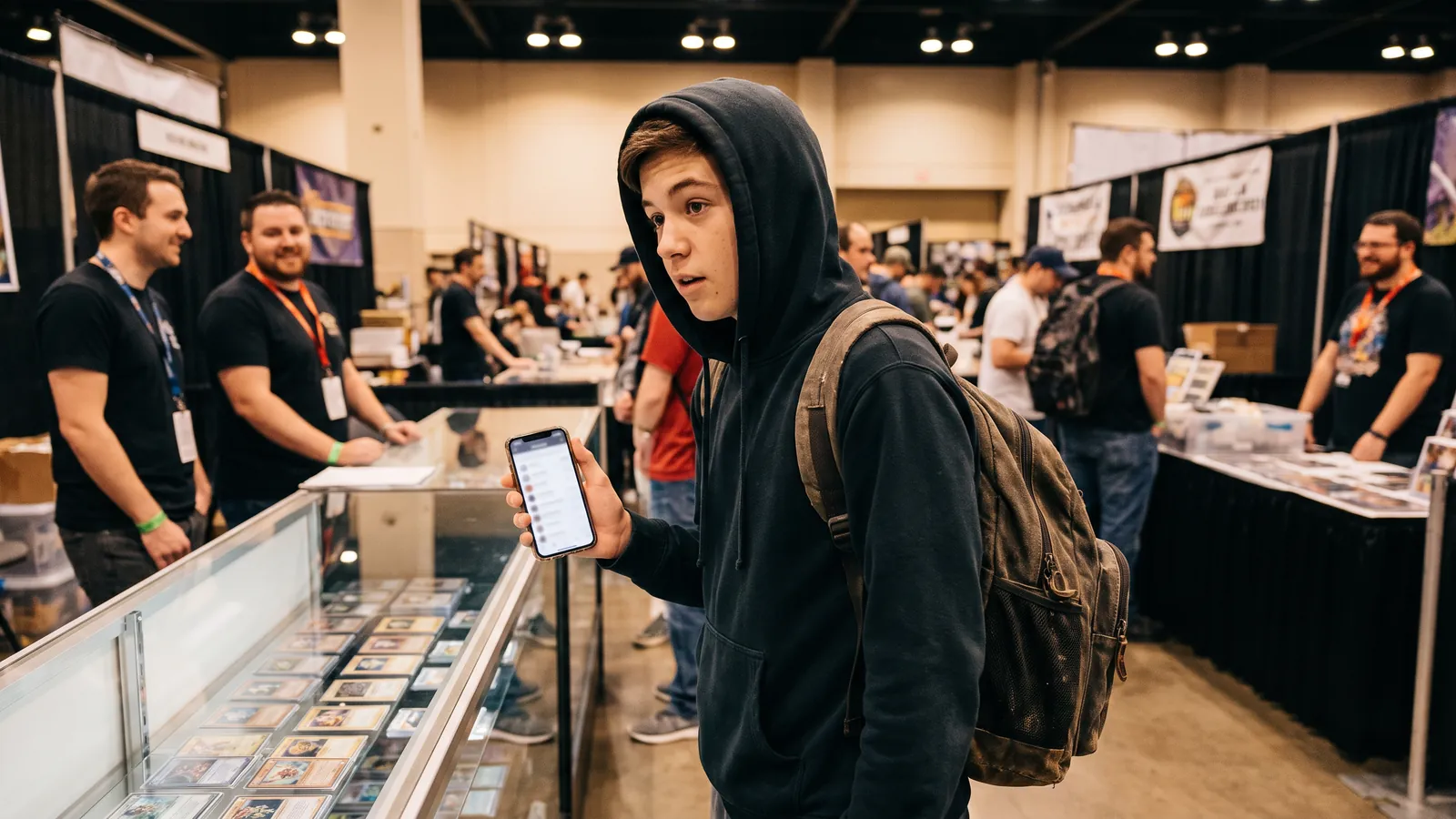
Cards in a case are not for you to reach for. Point to the card and ask the dealer to take it out. Never lift the glass or slide a case open yourself, even if it looks unlocked. For binders and boxes on the table, a quick "mind if I look through these?" is polite and almost always gets a yes.
Handle cards by the edges, keep them over the table, and put them back where they came from, in the same order. If a card is in a sleeve or top loader, leave it in unless the dealer says otherwise. For a raw card you are seriously considering, ask before you take it out of the sleeve to inspect it.
Keep the table clear
Do not set drinks, food, or your bag on a dealer's table or case. One spilled coffee can ruin a lot of inventory. If you need both hands, step to the side of the aisle. When you are done looking at a table, step back so the next person can see.
Negotiate like you will be back next month
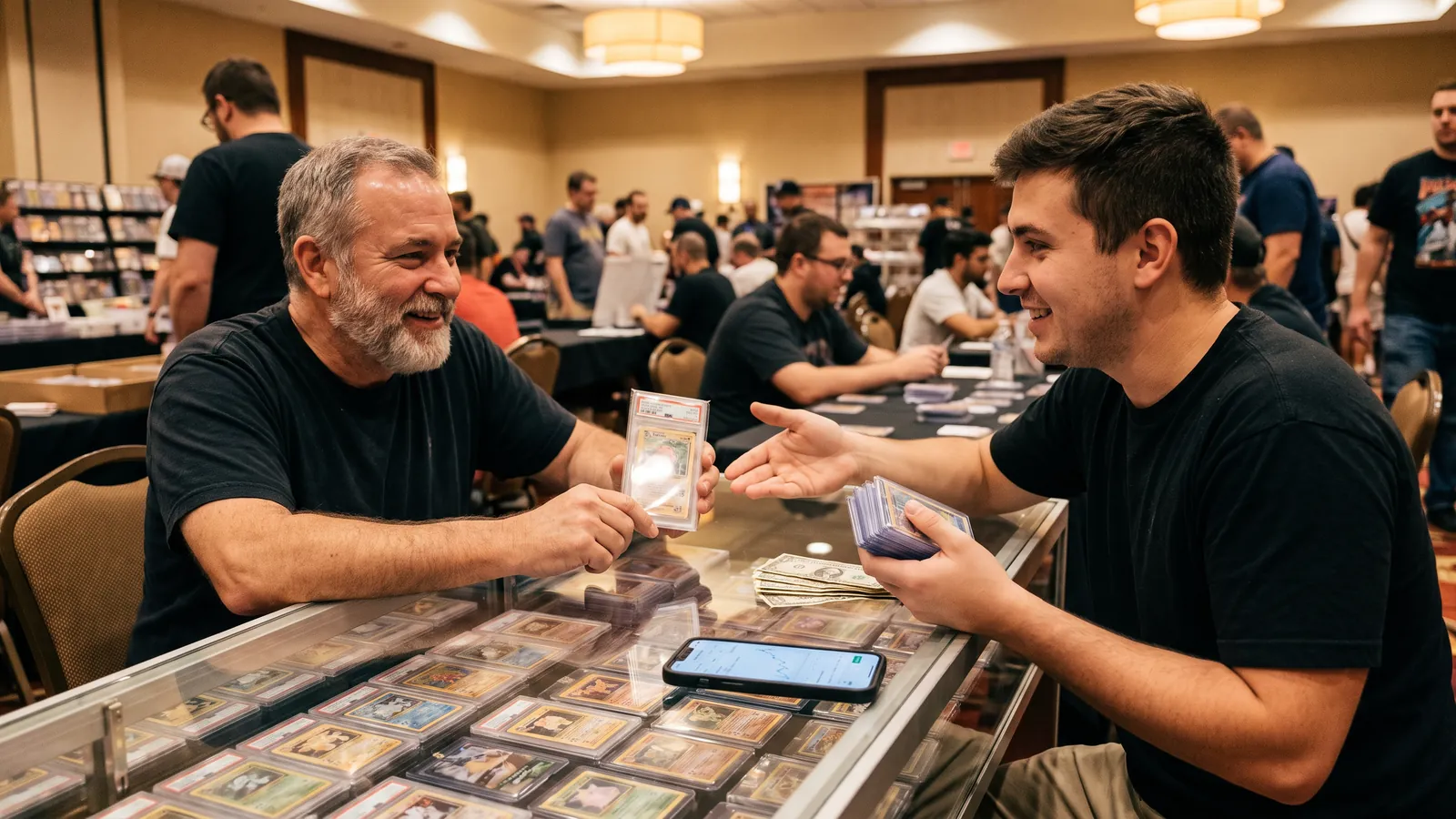
Haggling is expected at most shows. The tone matters more than the number. Ask for their best price, or make a reasonable offer with a reason, like a bundle or a condition issue you can point to. Low-ball offers with no reason sour the conversation fast.
- Do not argue with a dealer about what their card is worth. If you disagree, thank them and move on.
- If you agree to a price, buy it. Backing out after a deal is struck is the fastest way to be remembered badly.
- Do not negotiate on a card you have no intention of buying, just to see how low they go.
- Do not quote another dealer's price unless it is real and for the same card in the same condition.
Do not interrupt a deal
If a dealer is working with another customer, wait. Do not ask about a card the other person is holding, and do not make an offer on something they are negotiating for. It is the card show version of cutting in line. Once they are done, it is your turn.
This also applies to trades between collectors at the table. If someone is trading with a dealer, do not jump in with a better offer for the same card.
Selling? Ask first
Do not unpack a box of cards on a dealer's table unprompted. Ask if they are buying, and what they are looking for. If the table is busy with paying customers, come back later. Many dealers set aside time for buys in the morning or at slower moments in the afternoon.
Photos and price checks
Checking prices on your phone is normal and expected. Taking photos of an entire case of cards is a different thing, since some people use them to resell inventory they do not own. Ask before taking photos of a dealer's cards. A quick photo of a card you are thinking about buying is usually fine if you ask.
Bringing kids
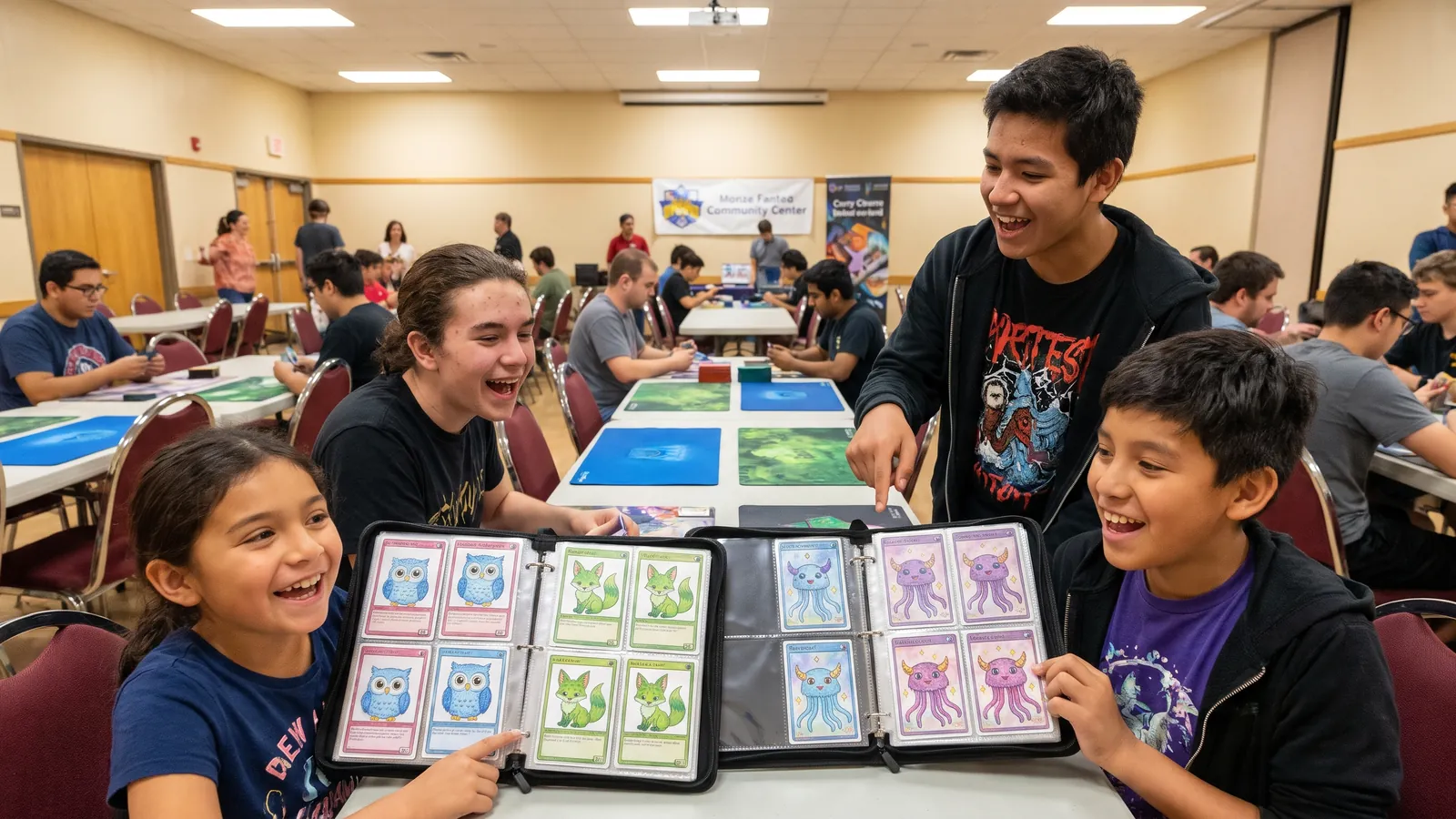
Card shows are great for kids, and most dealers love seeing young collectors. Help them follow the same rules: ask before touching, hold cards by the edges, keep hands out of cases. A set budget for the day gives them something to plan around and makes every choice feel like a real decision. Bulk bins and dollar boxes are the best part of the show for a lot of younger collectors.
Pay attention to space
- Keep backpacks in front of you in crowded aisles. A backpack swing can knock a case or a person.
- Do not block an aisle to chat. Step to the end of a row.
- Strollers and carts are welcome at most shows but take extra care in narrow rows.
- Check the show listing for accessibility notes and parking, and ask the organizer if you need something specific.
Early access and setup hours
Many shows sell early access passes that let buyers in before general admission. If you buy one, remember that dealers may still be setting up. Give them room to finish filling their cases, and do not pull cards out of boxes that are still being unpacked. Dealer setup hours are for vendors only. Walking in during setup without a badge is a quick way to get asked to leave.
The same goes for the end of the day. When a dealer starts packing, they are usually happy to make one last deal, but try not to hold them up for a long negotiation while the lights are going off.
Holds and follow ups
If you ask a dealer to hold a card while you walk the floor, give them a time and keep it. "Can you hold this for 20 minutes?" is fine. Holding a card all day and never coming back means they turned away other buyers for nothing. If you change your mind, swing by and say so.
If you want to keep buying from a dealer between shows, ask how they prefer to be contacted, and follow their shop. Do not try to talk them into a side deal that cuts out the show organizer on the floor. Organizers rent the room so everyone has a place to meet.
Say thanks, even when you do not buy
Dealers spend a lot of their day showing cards that do not sell. A simple thank you goes a long way. If you liked a dealer's table, tell them, follow their shop, and come back. Relationships are the real currency of the hobby. Regulars get first looks, fair prices, and the occasional heads up when a card on their want list comes in.
New to shows? Start with your first card show, then find a show near you.
Quick answers
Can I touch cards at a card show?
Ask first. Point to cards in a case and let the dealer take them out. For binders and boxes, ask before browsing, handle by the edges, and put cards back in order.
Is it rude to haggle at a card show?
No, haggling is expected. It becomes rude when offers are very low with no reason, when you argue about value, or when you back out after agreeing to a price.
Can I take pictures at a card show?
Price checks on your phone are fine. Ask before photographing a dealer's cards, especially whole cases.
Find a show to try it at
See what is on near you this weekend, sorted by distance.