Buying and selling at card shows: how dealers price, and how to get a fair deal
By Treasure Trove Editorial · · 5 min read
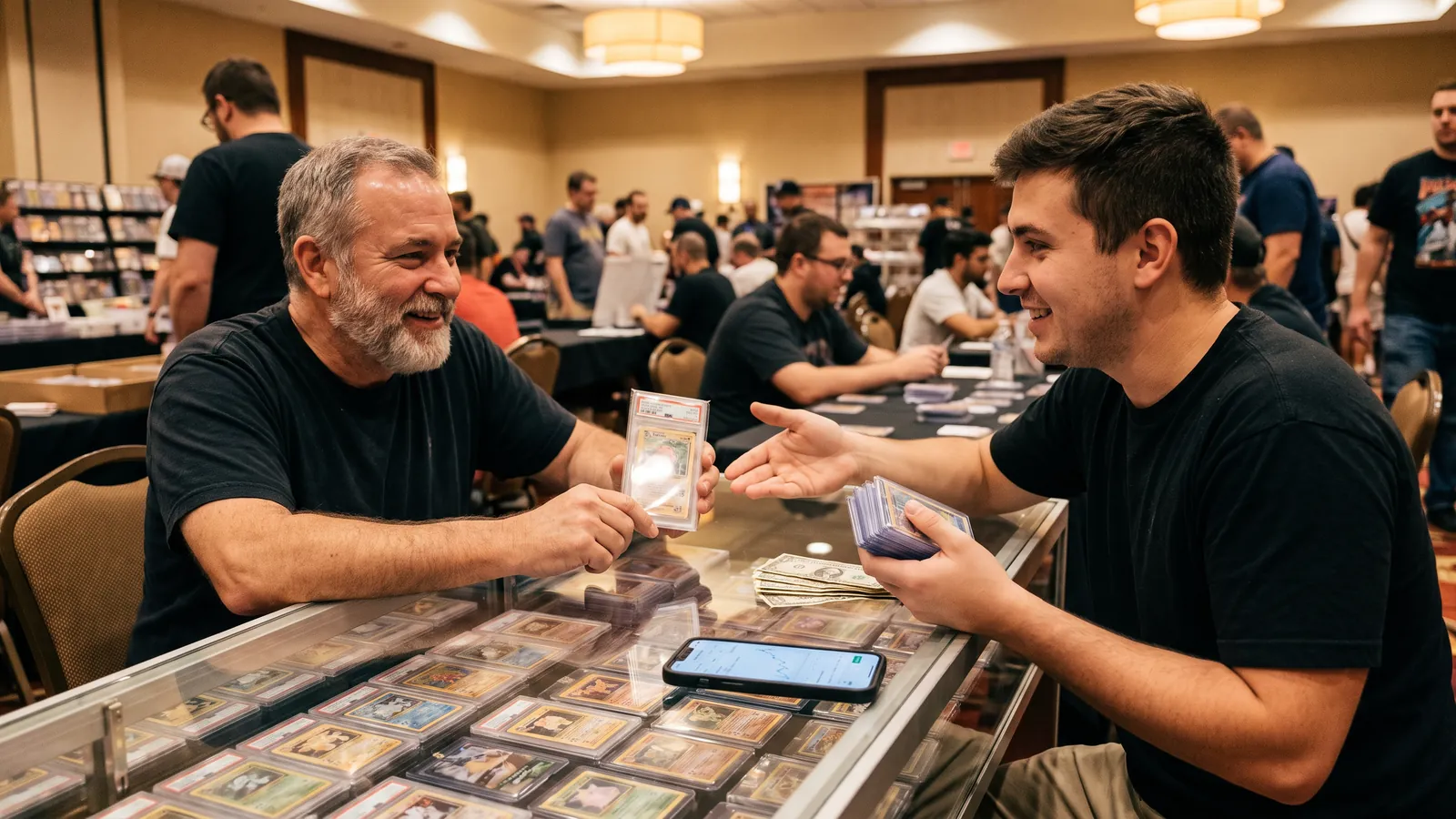
Every deal at a card show has two sides: the dealer needs to resell at a profit, and you want as close to full value as you can get. Knowing how dealers think about price makes both buying and selling faster and fairer.
Start with comps, not asking prices
A comp is a recent sale of the same card in the same condition. It is the number both sides should anchor on. Current listings tell you what sellers hope to get. Sold listings tell you what buyers paid. Pull up the last few sales for the exact card, the exact parallel, and the exact grade if it is graded. A raw card and a slabbed card of the same player are different items with different prices.
Look at the spread. If the last five sales are within a few dollars of each other, the market is clear. If they bounce around, use the middle and expect more back and forth.
Buying from dealers
Dealers price for a mix of reasons: what they paid, how fast the card moves, and what the room will bear. Popular cards are often priced at or a little above comps because they sell anyway. Slower cards can be priced to move.
- Ask for the best price instead of making the first number. Many dealers have room built in.
- Bundle. Buying three or four cards from one table gives the dealer a reason to round down.
- Pay cash if you can. Card fees cost dealers 3 percent or more, and some will pass that savings to you.
- Inspect raw cards closely. Look at corners, edges, surface, and centering under good light before you agree on a price.
- Know when to walk. If the gap is more than you are comfortable with, say thanks and check other tables.
Selling to dealers
When a dealer buys from you, they are taking on the risk that the card does not sell, plus the cost of their table, travel, and time. That is why cash offers come in below comps. As a rough guide, many dealers offer around 60 to 80 percent of recent sold prices for cards they want and can move quickly. Slower cards, condition questions, and bulk will draw lower offers, sometimes much lower.
You get better offers when you make the dealer's job easy:
- Sort before you go. Separate the cards worth selling individually from the bulk.
- Sleeve and top load the better cards so they can be looked at without handling.
- Know your comps and have them ready on your phone.
- Approach dealers who sell what you are selling. A vintage baseball dealer is the wrong table for modern TCG singles.
- Ask before you unpack. "Are you buying today?" saves everyone time.
Shop the offer. It is normal to show the same cards to two or three dealers. Be honest if someone asks whether you have had other offers, and do not use one dealer's number to squeeze another unless it is real.
Trading
Trades are where collectors often get the most value, because the dealer is moving inventory instead of spending cash. Many dealers will value your cards a bit higher in trade than they would in cash, say 80 to 90 percent of comps instead of 70. Their own cards are usually valued at their asking price. That is the deal, and it can still be a good one for you.
Agree on the price source before you start. Write down the values for each side, add them up, and settle any difference in cash. For trades between collectors, the same rules apply, and it is good practice to look at each card out of the sleeve before you agree.
Graded cards
Graded cards sell faster and are easier to price because the condition is settled. Check the certification number on the grader's website to confirm the slab matches the card. Look for cracks or signs that the case has been opened. Prices between grades can jump a lot, so a 9 and a 10 of the same card are not close substitutes. Our grading guide covers what to check and when submitting at a show makes sense.
Protecting yourself
- Count cash in front of the other person, and have them count yours.
- Do not hand over cards until payment is settled.
- For payment apps, use the goods and services option for purchases from strangers when possible, and confirm the payment landed before you leave the table.
- Keep your best cards on your body, not in a bag on the floor.
- If a deal feels rushed, slow it down. Good deals survive a second look.
Selling bulk and lower value cards
Bulk is the stack of commons, base cards, and low value singles that every collector ends up with. Dealers buy it by count, not by card, and prices are low because sorting it takes hours. Expect offers by the hundred or thousand cards, and expect them to be small. You will do better if you pull out anything with a clear individual value first, such as rookies, holos, short prints, and numbered parallels, and sell those separately.
Some shows have dealers who specialize in bulk, and some TCG vendors pay more for bulk of popular games because players buy it to build decks. If you have time, sort bulk by set or team before you go. A dealer who can see what is in the box pays more than one who has to guess.
Consignment
A few dealers will sell cards for you at their table and take a cut, often 10 to 20 percent. It can get you closer to full price without selling online yourself. Get the terms in writing: the asking price, the minimum you will accept, the dealer's percentage, and when you get paid or get the cards back.
When to buy and when to sell
Early on the first day, dealers are fresh and full of inventory, and buyers have the most selection. Toward the end of the last day, dealers often want to lighten their load before packing, which is when you can find the best prices. Selling tends to go better in the morning, when dealers still have cash and energy for new buys.
Ready to try it? See shows this weekend, or filter sports card shows and Pokémon card shows by distance.
Quick answers
What percentage do card show dealers pay?
Often around 60 to 80 percent of recent sold prices for cards they want and can resell quickly, and less for slow movers, condition questions, or bulk. Trade values usually come in higher than cash.
Should I sell my cards at a show or online?
Online usually gets a higher price but costs fees, shipping, and time. A show gets you cash on the spot with no fees. Many collectors sell their best cards online and their mid-range cards at shows.
How do I price cards at a card show?
Use recent sold listings for the exact card, parallel, and condition or grade. Asking prices are not comps.
Find a show to try it at
See what is on near you this weekend, sorted by distance.