Grading at card shows: on-site submissions, checking slabs, and what grades mean
By Treasure Trove Editorial · · 4 min read
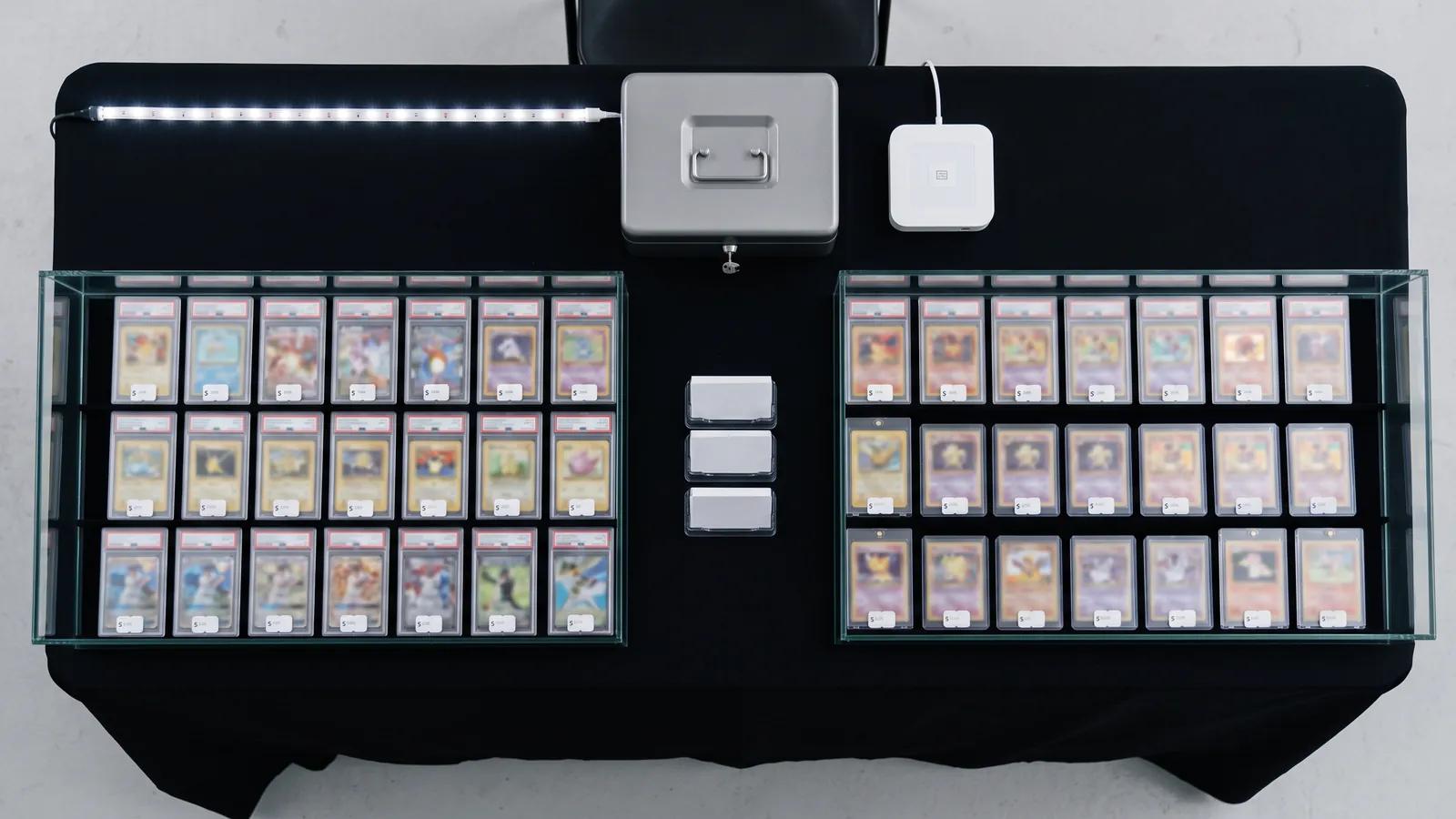
Grading puts a card's condition into a number and seals it in a hard plastic case, called a slab. At shows, you will see slabs everywhere, and larger shows often have a grading company or submission service on the floor. Here is how to use both well.
What a grade actually tells you
Graders look at four things: centering (how even the borders are), corners, edges, and surface (scratches, print lines, dents, stains). Most scales run from 1 to 10, with half points at some companies. A 10 means the card is essentially flawless at the time of grading. A 9 is excellent with a small flaw. Below 8, flaws become visible to most people at a glance.
Grades from different companies are not the same thing, even when the number matches. Buyers price each company separately, and some companies are preferred for specific eras or games. When you compare prices, compare the same company and the same grade.
On-site grading at shows
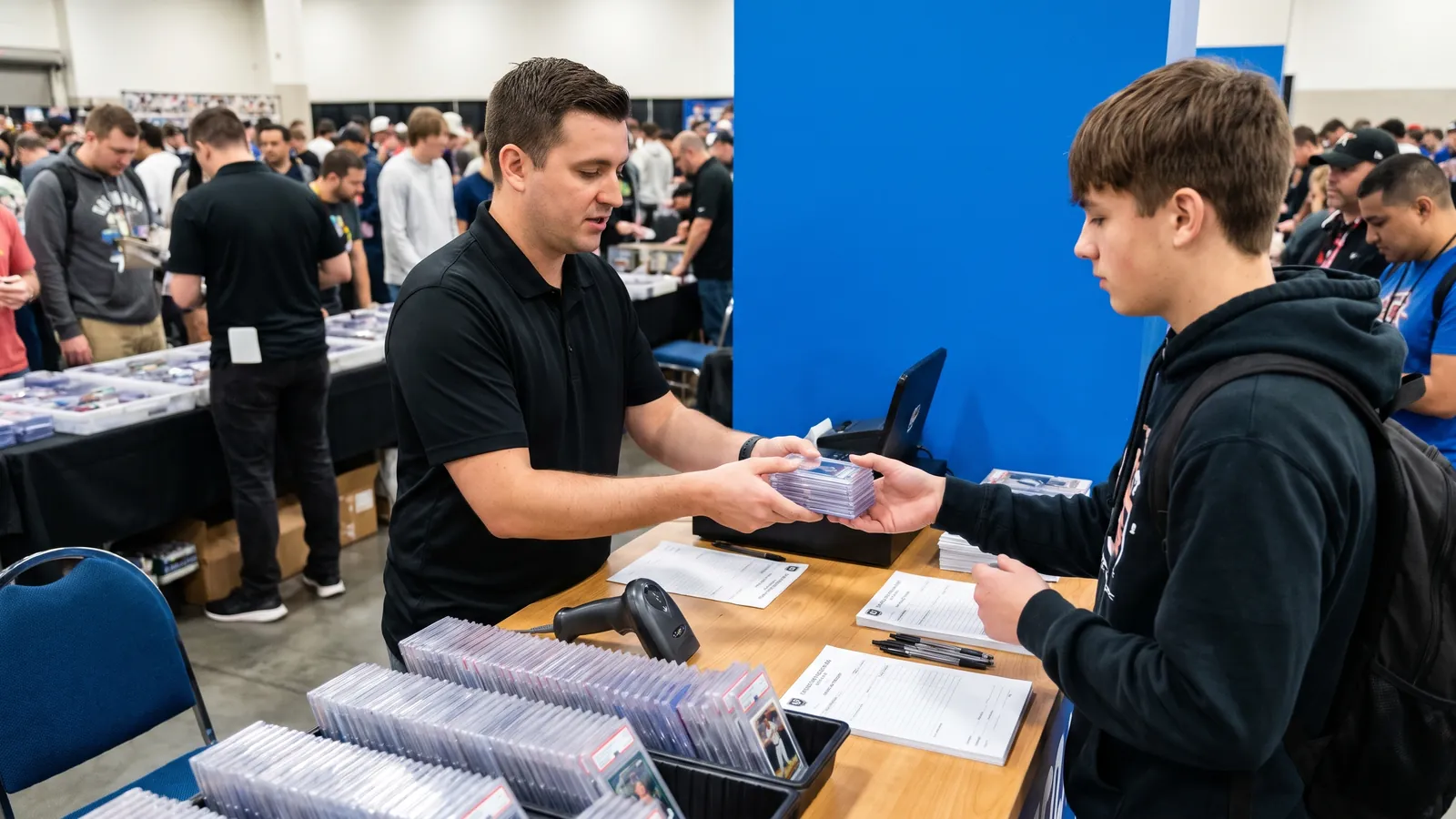
Larger shows sometimes host a grading company booth or a submission service. Some offer on-site grading, where cards are graded during the show and returned before it ends. Others take submissions at the show and ship the slabs back later. Both save you shipping your cards in, and on-site grading lets you see results fast.
Treasure Trove lists the grading services on site when the organizer publishes them. You can filter the map by grading service. Confirm with the organizer before you bring a big stack, because service levels and capacity at a show are limited and can sell out early.
- Fill out the submission form before you arrive if the company allows it. Lines move faster.
- Bring cards already sleeved and in semi-rigid holders if the company asks for them.
- Know the declared value of each card. It sets the service tier and the insurance.
- Ask when results will be ready, and where to pick them up. Plan your day around it.
Choosing what to grade
Grading costs money, so it only makes sense when the graded card is worth meaningfully more than the raw card plus the fee. Before you submit, look up recent sales for the card raw and in the grades you think it could get. Be honest with yourself about the grade. Most cards that look perfect to the naked eye have a small flaw under a loupe.
- Check centering first. Compare the left and right borders, then top and bottom. Off-center cards rarely get top grades.
- Look at corners under a bright light. Any whitening shows up fast.
- Tilt the card under light to see the surface. Look for scratches, print lines, and dents.
- Run a finger lightly along the edges through the sleeve to feel for chips or roughness.
- Compare the grade you expect against recent sales and the fee. If the math only works at a 10, think twice.
Checking a slab before you buy
Graded cards are easier to trust than raw cards, but not automatically. Take a minute before you pay.
- Look up the certification number on the grading company's site. The card, year, set, and grade should match the label exactly.
- Compare the card in the slab to the photo on the cert lookup, if one is available.
- Check the case for cracks, cloudy plastic, or seams that look tampered with.
- Make sure the label is the right style for the year it was graded. Fake labels exist.
- Check that the card sits straight in the inner holder and does not move.
Price jumps between grades
For many cards, the jump from a 9 to a 10 is not 10 percent. It can be two, five, or ten times. That is why graded card prices can look strange at first. When a dealer prices a 9 well below a 10, that is normal. It also means it is worth comparing each grade's recent sales separately and not assuming a slab is a bargain just because it is a lower number.
At the show or by mail
Submitting at a show saves shipping and insurance, and you hand your cards to a person instead of a box. Some companies also run show specials with lower fees or faster turnaround. The tradeoff is capacity. On-site slots are limited and often fill early on the first day, and the fastest service levels can cost more than the same service by mail.
Mail-in works well for large batches of lower value cards, since you can pick the slowest and cheapest tier and wait. If you are sending by mail, pack each card in a sleeve and semi-rigid holder, sandwich the stack between pieces of cardboard, and use tracked, insured shipping. Photograph the front and back of every card before it goes out.
Fees and turnaround
Grading fees depend on the company, the declared value, and how fast you want the card back. Economy tiers can take weeks or months. Express tiers can come back in days, or during the show itself, for a much higher fee. Higher declared values move cards into more expensive tiers, so declare honestly. Under-declaring to save money can leave you underinsured if something goes wrong.
Add up the full cost before you submit: the grading fee, any per-card handling fee, return shipping, and insurance. Then compare it with the price difference between the raw card and the grade you realistically expect.
Raw or graded?
Raw cards are cheaper and you can judge condition yourself, which can mean deals. Graded cards cost more but remove the guesswork and are easier to resell. Many collectors buy raw for their own collection and graded for higher value cards they may sell later. Either is fine. The right choice depends on why you are buying the card.
If you are planning to sell graded cards, read buying and selling at card shows. To find a show with grading on site, open the map and use the grading filter, or browse upcoming shows by state.
Quick answers
Can you get cards graded at a card show?
At some larger shows, yes. A grading company or submission service may take submissions on the floor, and some grade on site during the show. Check the listing and confirm with the organizer.
Is it worth grading my cards?
Only when the graded value at a realistic grade beats the raw value plus the grading fee by enough to matter. Look up recent sales for each grade before you submit.
How do I know a graded card is real?
Look up the certification number on the grading company's website, confirm the details and photo match, and inspect the case for cracks or tampering.
Find a show to try it at
See what is on near you this weekend, sorted by distance.